Discover the Talks at PyCon Colombia 2026 ✨
Browse every accepted session—titles, tracks, levels, and speakers—before you plan your days in Medellín.
From Voice to Action: Building an AI Assistant with Python and Google Workspace
Jumping between Gmail, Calendar, Drive, and Jira tabs for repetitive tasks is exhausting. That's why we built Attento, an assistant that lets you execute real actions in Google Workspace using natural language. In this talk we build Attento, an end-to-end voice assistant that turns natural language into real actions across Google Workspace. We'll cover architecture with FastAPI, OAuth 2.0 authentication with PKCE, function calling with Gemini, streaming with NDJSON, best practices with uv and Pydantic Settings, and the path from demo to production with Postgres and automated morning briefings.

Juan Manuel Marín Bedoya
Senior Data Engineer @ Huge

Juliana Suárez Ávila
Data Scientist @ Cuesta Partners
How to Find Pearls on the Bottom of the Sea - Autoencoders as Anomaly Detection Model
In the AI/Machine Learning world, we often think of anomalies as errors that need to be fixed. But what if some of those anomalies are actually opportunities of immense value? Detecting these opportunities, these "pearls," is a huge challenge due to the vastness and complexity of the data ocean. There is a solution: anomaly detection models—positive ones in this case—and we will explore them in this session.

Feeding the Invisible: Food Security in Intermediate Cities with Python
In many countries, food insecurity is not only a social problem but also a data problem. In Colombia, key monitoring systems have lost continuity, leaving critical information gaps for public decision-making. This talk presents the development of a Python prototype to build a monitoring and prediction system for food insecurity risk in intermediate cities, using only open data. From a reproducible pipeline, multiple data science components are integrated: ingestion and processing of food price data (SIPSA), time series models for price forecasting (including classical approaches and machine learning like XGBoost), household segmentation through clustering from socioeconomic surveys, construction of a composite index relating income, prices, and vulnerability, and development of a decision support system (DSS) prototype. Attendees will take away a replicable approach for building complex indicators, strategies for working with imperfect open data, ideas for integrating models, socioeconomic data, and visualization in a single system, and a real example of applying Python in public policy and territorial development.

From ETL to Agentic Workflows: The Evolution of Data Engineering in the Generative AI Era
This hands-on workshop will explore how data engineering is evolving from traditional ETL-based pipelines toward intelligent agent-driven systems capable of reasoning, planning, and executing tasks autonomously. Through hands-on exercises, participants will learn the fundamental concepts behind agentic workflows, the new architectural patterns emerging in the industry, and the modern Python libraries that enable building these types of solutions. Tools for agent creation, task orchestration, integration with language models, and automation of complex processes will be covered. Upon completion, attendees will have built functional examples and will understand how to apply these new capabilities to transform traditional data processes into more dynamic, autonomous, and scalable systems.

How We Stopped Answering Data Questions and Built the Stack That Answers Them
If you've worked at a growing startup, you probably know the feeling: multiple teams pulling different numbers for the same metric, ops constantly asking engineering for basic answers, and creating or organizing metrics that's a real pain. Every new question feels like starting from scratch. This talk is the story of how a small team fixed that. First, by building a proper dbt architecture from scratch with Sources, Staging, Intermediate, and Marts so that things like bookings, revenue, and providers were defined in one place and everyone was looking at the same number. Once the data was reliable, we connected an LLM so non-technical teammates could ask questions in plain English and get real answers directly from Snowflake. No SQL, no ticket, no waiting on engineering. It's an honest look at what we built, what broke, and what we got wrong the first time. You'll walk away with a clear mental model for building a dbt layer people actually trust, a practical architecture for connecting an LLM to your warehouse, and the one thing that made it all click: your dbt docs are your LLM prompt.

Multi-Agent Teams in AI-Assisted Development: A Glimpse Into the Future of Programming
Programming has gone through a quiet but radical transformation in the last few years. We went from writing every line, to autocomplete, to AI proposing whole functions, to reviewing and steering AI-generated code. What comes next? Multi-agent systems, where you have a team of specialized agents working in parallel. This workshop is a hands-on, honest look at what that shift means today, and what it points to tomorrow. We'll start by mapping the current landscape together: what tools exist, how they approach multi-agent orchestration, what each one gets right, and where the real tradeoffs are. The goal isn't to pick a winner — it's to build a shared vocabulary and a realistic picture of the state of the art. From there, we'll move into live demos. Rather than polished showcases, these are honest explorations: what these systems can actually do today, where they break down, and what those breakdowns tell us about the deeper challenges in multi-agent coordination. Token costs, context limits, agent miscommunication, and the question of how much to trust your agents — these are real problems worth examining together. The talk closes with the bigger question: what does all of this mean for us as developers? What skills are becoming more important, which ones are becoming less so, and how do we stay relevant as the abstractions keep deepening? Not predictions, but a grounded reflection based on what's already visible in these early systems. The practical question isn’t whether this future is coming; it’s how to get ahead of it. Audience takeaways: A clear mental model for what multi-agent coding actually is (vs. single-agent tools and vs. orchestration frameworks) A working setup guide for multi agent works effectively Practical demos actually showcasing what to do with these tools A grounded perspective on what these experimental systems tell us about the next years of AI-assisted development and programming Suitable for: Python developers with some familiarity with AI tooling. No deep ML background required — this is a practical developer talk, not a research talk.

Daniel Sabogal
Data & ML Intern @ Loka

Jose Hernan Ortiz Ocampo
Senior Machine Learning Engineer @ Loka
NORTH: Claude as a Real Copilot
We all use AI to program. Few use it well. Most developers interact with Claude or any LLM as if it were Google with superpowers: they ask a question, receive an answer, copy and paste, unstructured prompts. The next day, the AI has no idea who you are, what project you are working on, or why you chose PostgreSQL over MongoDB last week. Every session starts from zero. Every time you re-explain the same thing. And the result is brilliant answers that do not know your code. How serious is this? I measured it. I asked Claude exactly the same thing — "give me the complete project context" — with and without methodology. Without structured context, Claude detected 3 of 5 team members, found 3 different versions of the project without knowing which was real, could not identify technical debt, and had no idea about the current sprint. With NORTH, the answer was precise: complete team with roles, correct canonical version, 3 technical debt items with severity, defined sprint with priorities, and pending PR to merge. Usefulness score: 7/7 with NORTH vs 2.5/7 without it. Same tokens. Same cost. The difference is not money — it is useful information vs noise. What if with a single command — /north — Claude knew exactly where you left off and what comes next? That is NORTH. A methodology that turns Claude into a real development copilot. Not a chatbot that answers questions — an agent with live memory of your project.

PDF Data Extraction at Scale: When to Trust an LLM
LLMs read chaotic documents like no one else, but when money or legal liability is on the line, the question is not "can it?" but "when should I trust it, and how do I catch it when it is wrong?". In this hands-on workshop we build, step by step, a real extraction pipeline for legal PDFs with variable formats, orchestrated with Airflow, using a hybrid extractor (deterministic + LLM) and deterministic guardrails in Python. You will leave with a framework for deciding which tool to use and a reliable pattern for production environments.

Lessons Learned Reporting Vulnerabilities in the Python Ecosystem
You've surely received that notification telling you to update a dependency due to a security flaw. But have you wondered what happens from when someone discovers that vulnerability until the patch reaches your project? In this talk I'll share my experience reporting vulnerabilities in the Python ecosystem. We'll explore the behind the scenes: from the technical finding and reporting process to collaboration with maintainers and patch publication. We'll address not only technical aspects but also the human factor—both crucial for effective vulnerability resolution. The challenges maintainers and the community face, especially in this new era of open source software security where artificial intelligence plays an increasingly relevant role.
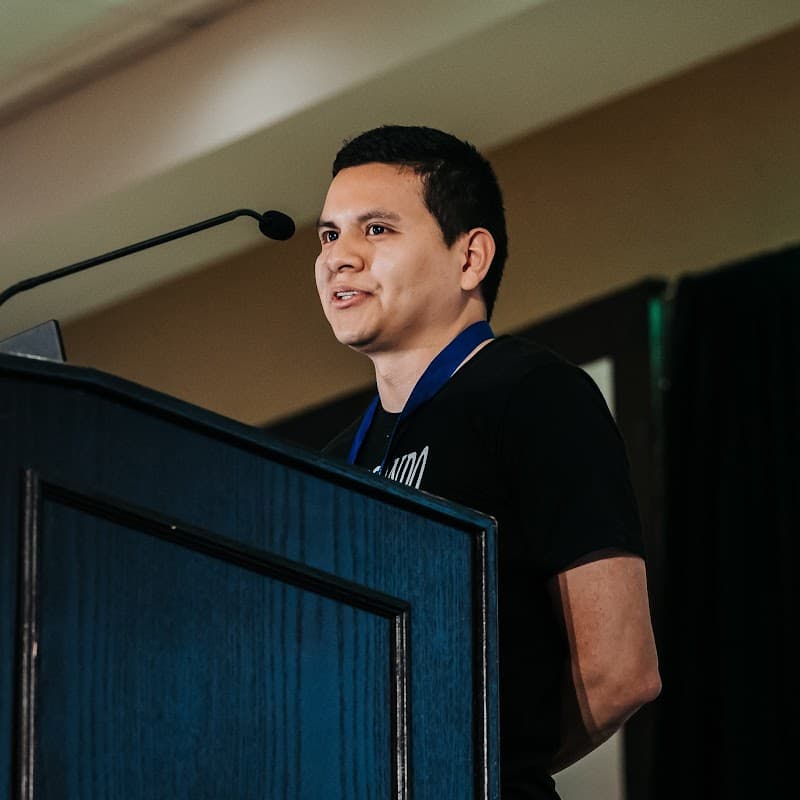
Camila Plejia, Virtual Assistant Applied to People with Tetraplegia
The combination of different tools and technologies in artificial intelligence—Computer Vision, OCR, NLP, RPA, Voice to text, text to voice—gives rise to a virtual assistant, Camila Plejia, that helps people with tetraplegia, facilitating their daily tasks such as reading news, checking the weather, reviewing, reading and writing email, reviewing, sending and reading WhatsApp messages, searching for and watching a specific video on YouTube, among others. It allows a person with tetraplegia to have a window of communication with the outside world, considering they spend much time isolated between four walls and depend on a third party's assistance to perform activities.
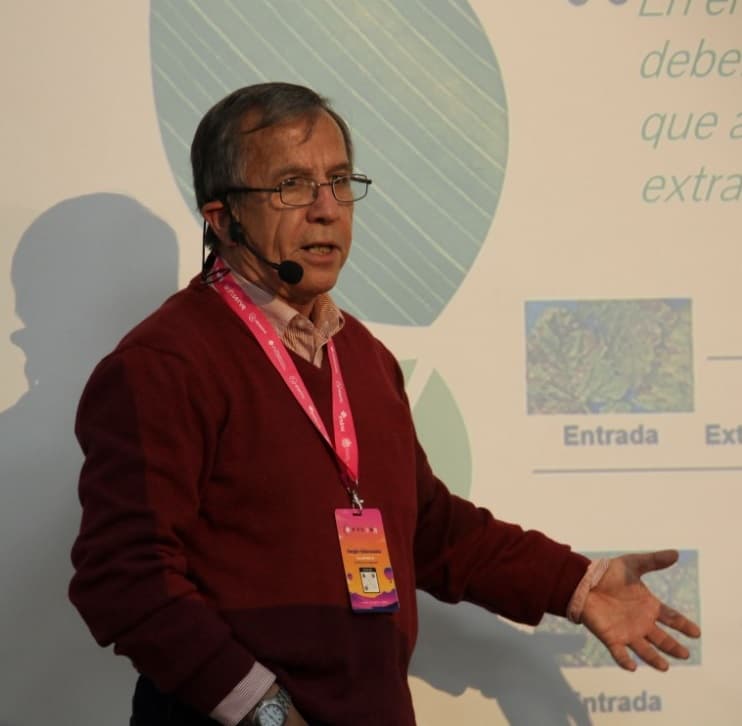
Dashboards That Think: Build Agentic Analytics with Sigma
Traditional dashboards only show data: you ask, they answer, and you start over. In this hands-on workshop we will take the next leap: we will build an agentic dashboard in Sigma that reasons about data, applies business logic, and executes actions, without writing code. Working on live data in the warehouse, you will learn step by step to: design a dashboard on Sigma's canvas; incorporate Sigma Agents to answer questions in natural language, chain multiple reasoning steps, and trigger workflows; and connect the dashboard with external tools and systems via MCP, all governed and without taking data out of your platform. In the end you will have an intelligent dashboard working end to end that you can replicate in your own work. It is an ideal session to understand, hands on keyboard, what "agentic analytics" really means in today's AI conversations, and how anyone can build it without being a data engineer or analyst